


Filling the gap
A bridge replaces a missing tooth by anchoring a replacement to the teeth on either side of the space. The anchor teeth — the abutments — are crowned, and the replacement tooth, called the pontic, is joined between them as one piece. It is cemented in place and does not come out.
A gap is not only cosmetic. Teeth drift toward empty space, the opposing tooth can over-erupt with nothing to bite against, and chewing force redistributes onto teeth that were not designed to carry it. Over time that can open spaces elsewhere, change the bite and make the teeth around the gap harder to clean.
Bridges come in a few forms. The traditional bridge crowns a tooth on each side of the gap. A cantilever bridge is supported from one side only, which suits a few specific positions. A resin-bonded bridge attaches a thin wing to the back of the neighboring teeth rather than crowning them, and is mostly used for front teeth. A bridge can also be carried by implants instead of natural teeth.

A bridge is usually faster and does not require surgery or a period of bone healing. Its main cost is biological: the neighboring teeth must be reduced for crowns, even if they are perfectly healthy.
An implant leaves neighboring teeth untouched and preserves the bone where the root used to be, but takes longer and needs enough bone to place. A partial denture is the removable alternative, and usually the least expensive.
If the adjacent teeth already need crowns — because of large old fillings or cracks — a bridge often makes good sense, since it repairs them at the same time as it replaces the missing tooth. If they are pristine, that is a real argument for an implant. The restorative dentistry page sets all the options side by side.
How a bridge is made
- Assessment. An examination and X-rays check that the anchor teeth and the gum and bone around them are healthy enough to carry a bridge.
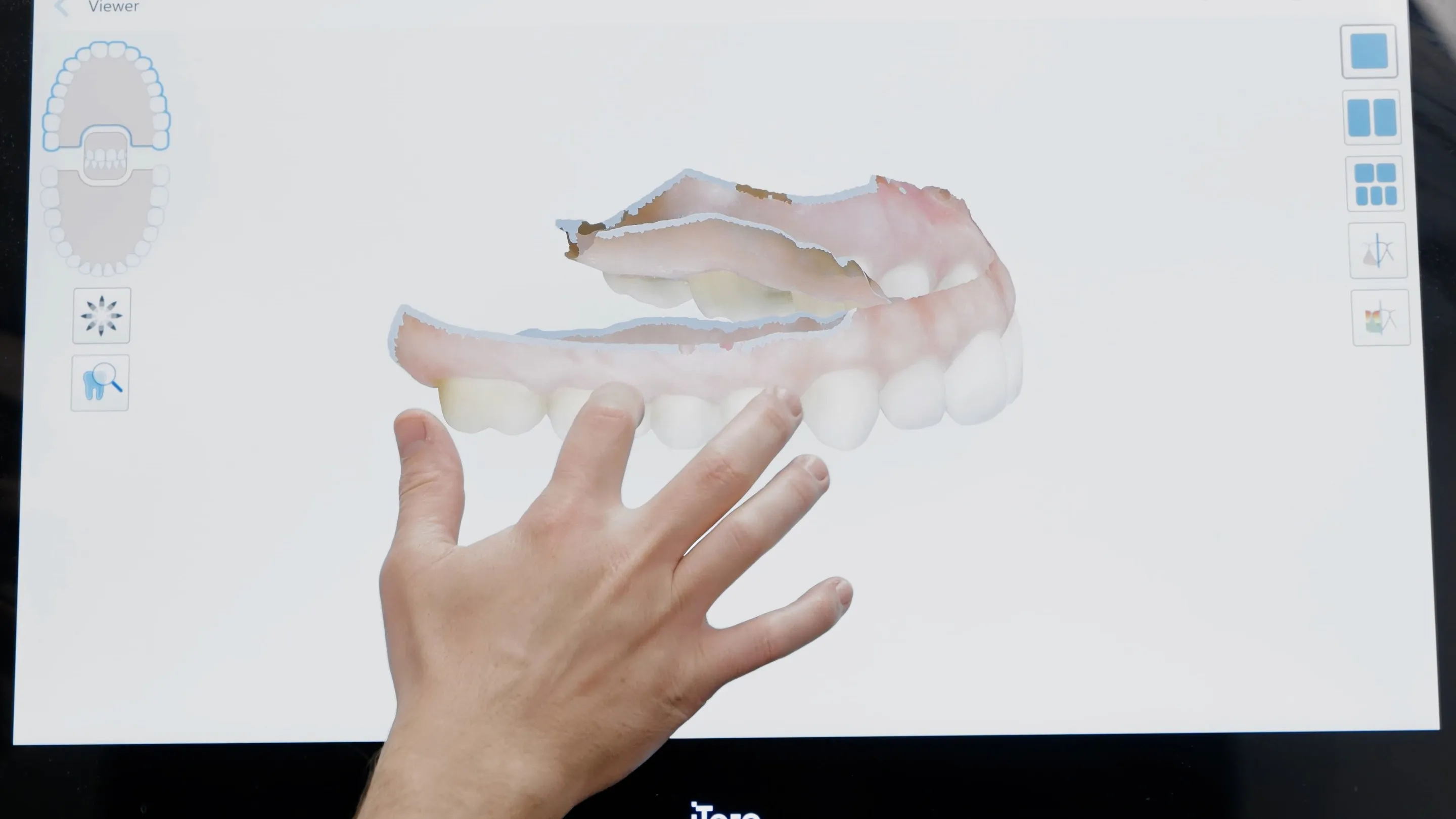
- Preparation. The anchor teeth are numbed and shaped so the crowns can fit over them, and a record of the teeth is taken — a digital scan or a conventional impression.
- Temporary. A temporary bridge protects the prepared teeth and fills the gap while the permanent one is made.
- Fitting. The permanent bridge is checked for fit, shade and bite, adjusted where needed, and cemented.
Caring for a bridge
A bridge is joined, so you cannot floss between its units normally. Cleaning underneath the pontic with a floss threader, superfloss or a water flosser is what determines how long it lasts, because the anchor teeth can still decay at the edge of their crowns and the gum under the bridge can still become inflamed.
Brush twice a day with a fluoride toothpaste, clean under the bridge once a day, and keep up regular cleanings and exams so any problem at an anchor tooth is found while it is still small. Avoid using the bridge to bite very hard things such as ice.
Frequently Asked Questions
How long does a bridge last?
Many last a decade or more. Failure is usually decay or gum disease affecting one of the anchor teeth rather than the bridge itself breaking, which is why cleaning under it matters so much.
Is a bridge removable?
No. A conventional bridge is cemented permanently and only a dentist can take it off. A removable appliance that replaces several teeth is a partial denture.
Does getting a bridge hurt?
The anchor teeth are numbed while they are shaped, so the preparation itself should not be painful. Some sensitivity to cold and some gum tenderness for a few days afterward is common.
Can I eat normally with a bridge?
Once the permanent bridge is cemented, yes. While a temporary is in place, avoid very sticky or hard foods on that side. Hard things such as ice and hard candy are worth avoiding on any bridge in the long run.
What happens if an anchor tooth gets a cavity?
Caught early, it can sometimes be repaired at the edge of the crown. If the decay is extensive, the bridge usually has to be removed and remade, and the anchor tooth may need further treatment first.
Should I get a bridge or an implant?
It depends mostly on the teeth either side of the gap and on the bone. If those teeth already need crowns, a bridge often makes good sense. If they are healthy, an implant avoids reducing them. An examination and X-rays answer it for your own mouth.