


Reception
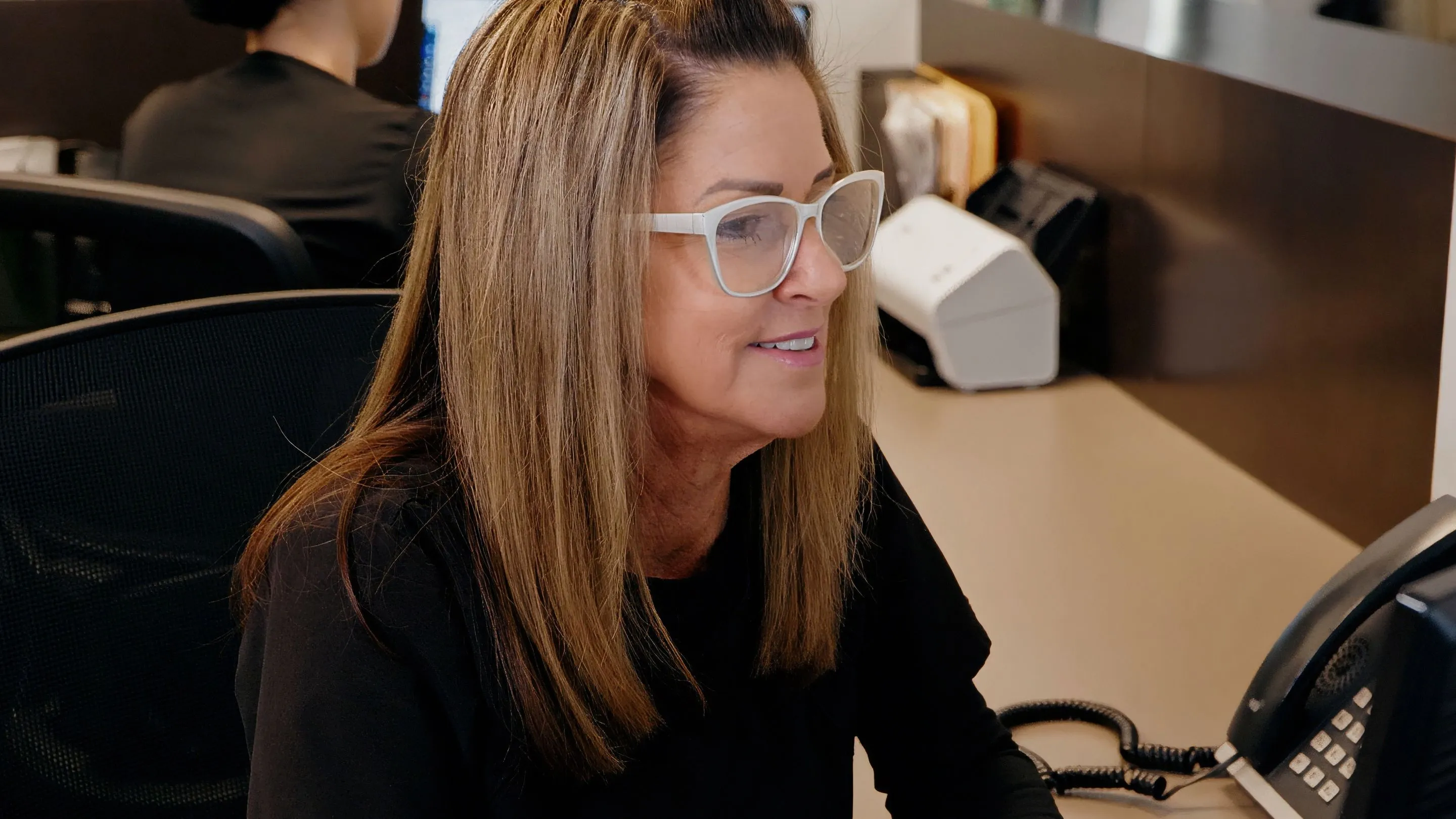
The front desk is the first thing you reach, and the Mills Dental Group sign is on the wall behind it. This is where you check in, hand over any forms, and ask the practical questions — about your appointment, your paperwork or your insurance.
If you are coming for the first time, the new patient forms page covers what is useful to have ready.
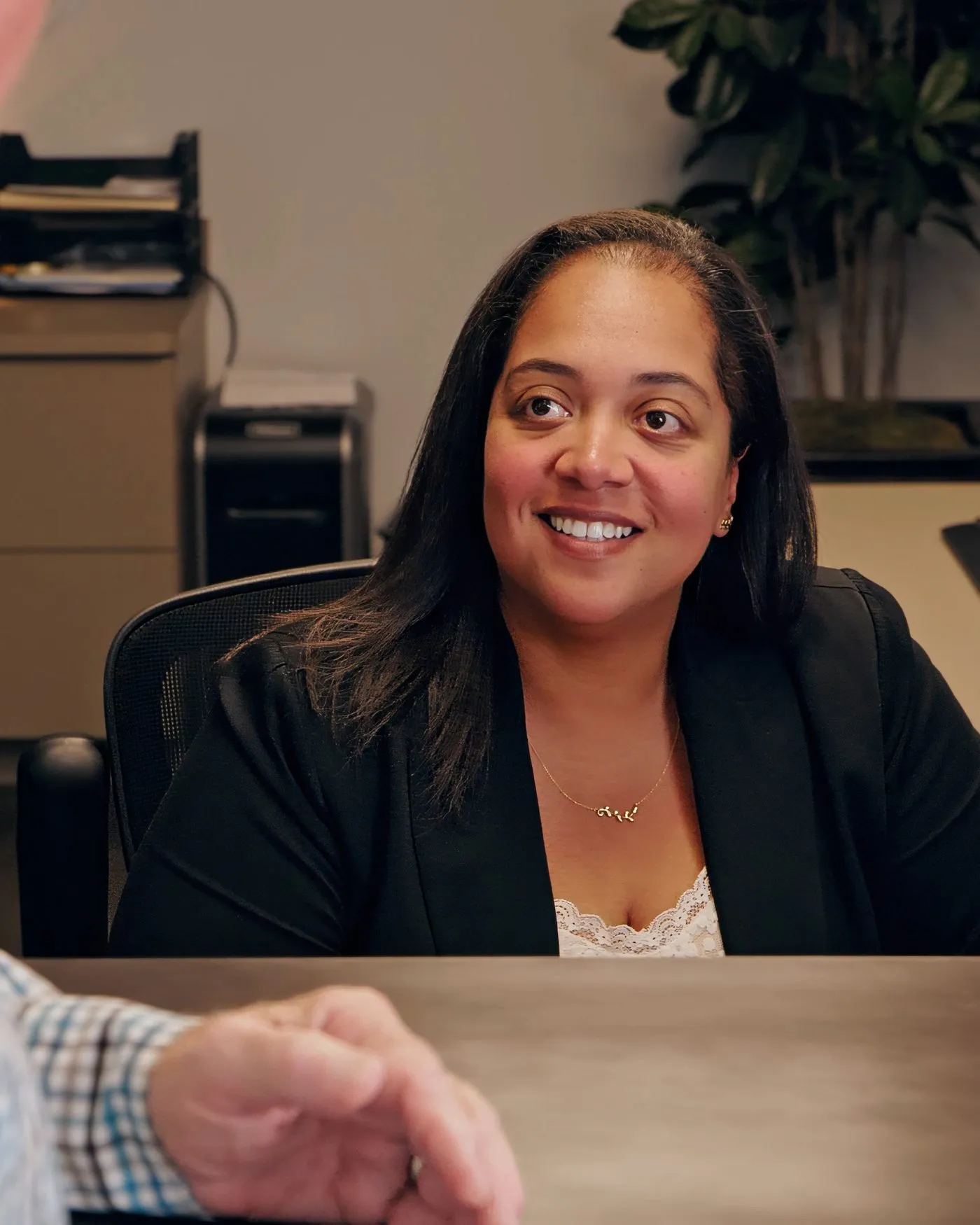
Talking through a treatment plan
Here a treatment coordinator sits at her desk going through costs with a patient. When treatment is recommended, this is the conversation that matters: what each part of the plan is, what it costs, and how insurance is expected to apply.
It is the right moment to ask for the estimate in writing, and to ask which parts are urgent and which can wait. Financial options lists the questions worth asking.
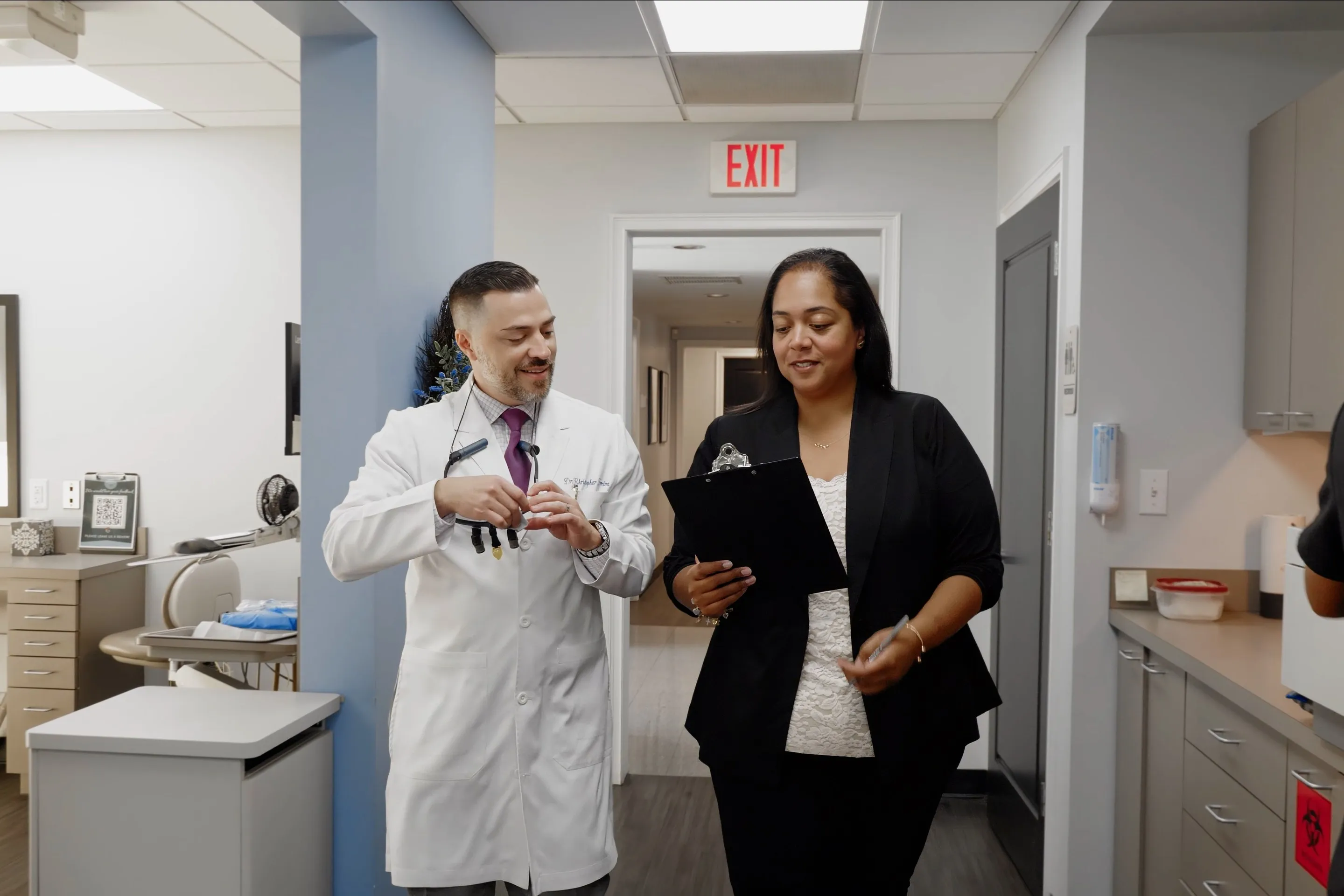
The treatment rooms
The treatment rooms open off a hallway. In this photograph Dr. Ferreira and a team member are walking that corridor, with an operatory — its dental chair and cabinets — on the left.
Most of what happens in these rooms is general dentistry: cleanings and exams, fillings and the other everyday care that keeps small problems small.
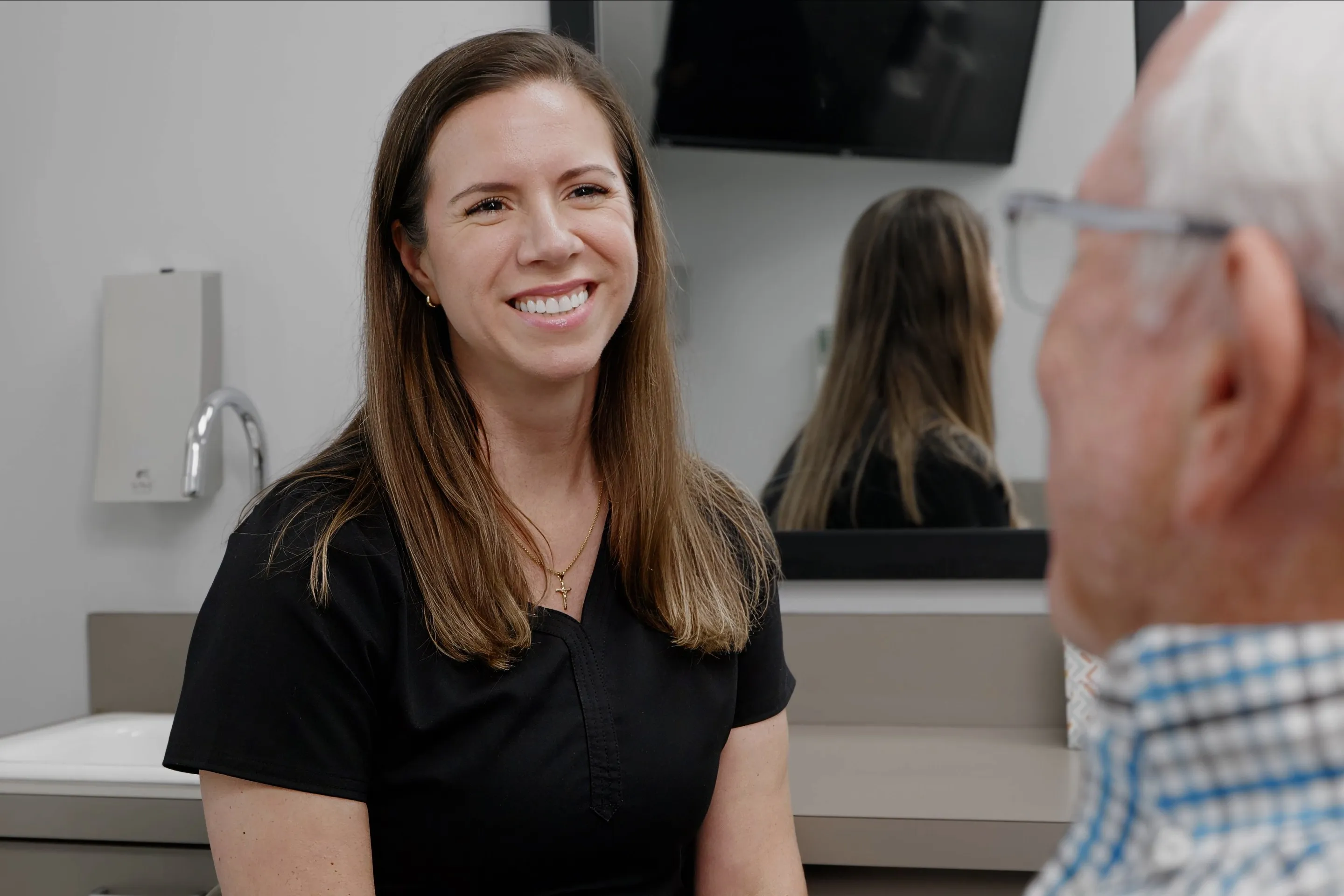
In the chair
A routine visit usually means time with a hygienist: removing plaque and tartar, polishing, and checking the gums, followed by an examination by the dentist.
If you are nervous, or it has been a while, say so at the start. The appointment can be paced around it, and it helps to agree a signal for when you want a pause.
Instrument sterilization
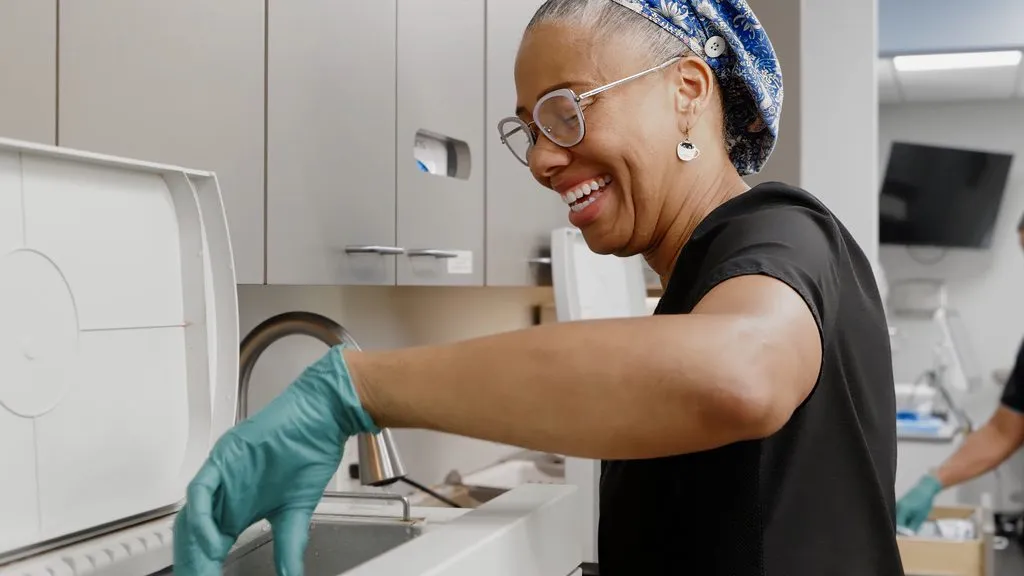
Between patients, instruments go for cleaning and sterilization. The photograph shows a team member, gloved, working at the instrument sterilization sink.
In general, dental practices follow CDC infection-control guidance: reusable instruments are cleaned, packaged and heat-sterilized between patients, and single-use items are used once and discarded.
Imaging on screen
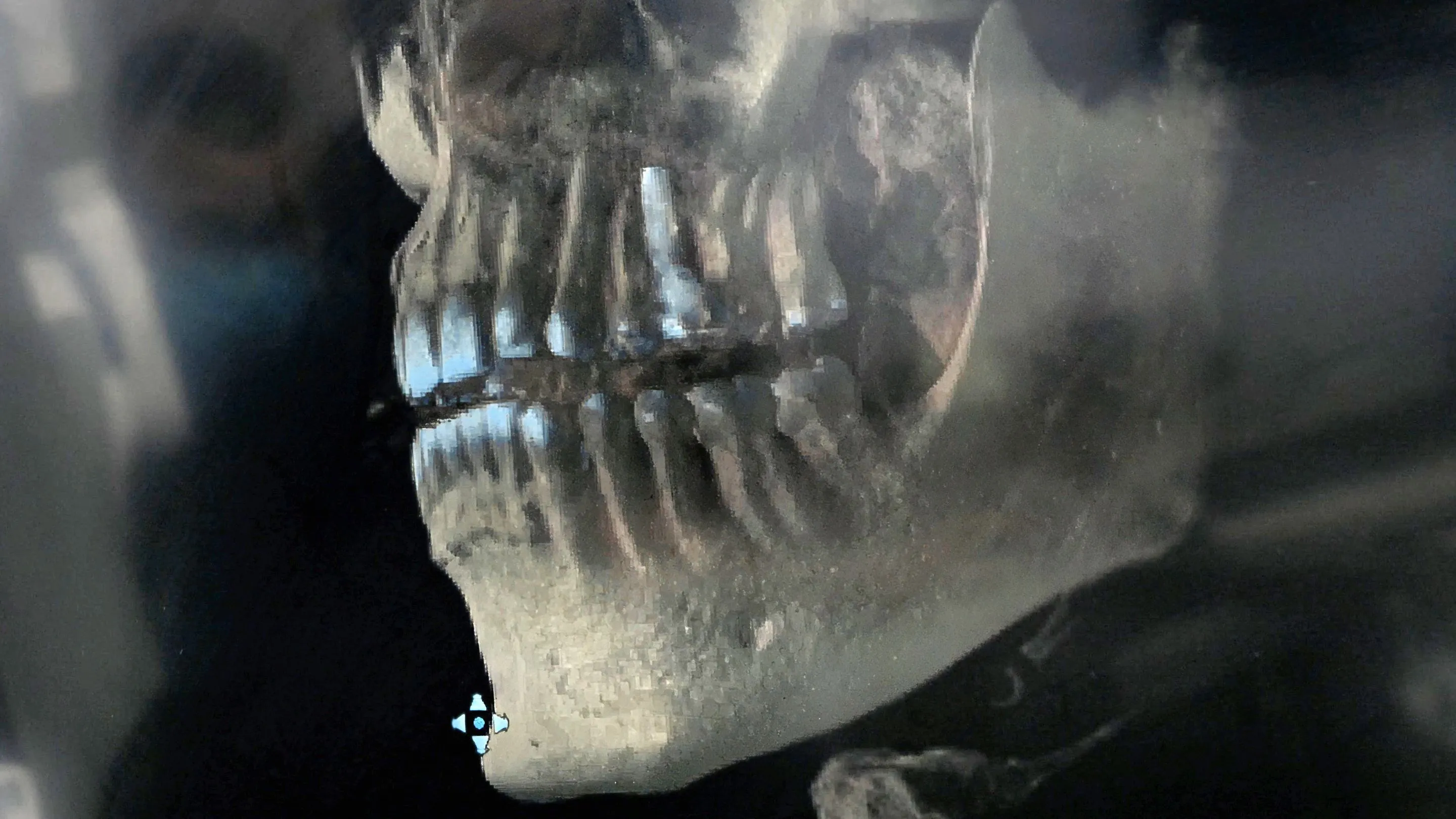
X-rays and scans appear on a screen rather than on film, so they can be enlarged and shown to you while they are explained. This one is a 3D cone beam image of the jaw and teeth — the kind of view used to plan implants and to see what a flat image cannot.
Routine digital X-rays work the same way: the image is on screen in seconds, and it can be compared with earlier ones to see whether anything has changed.
Digital impressions
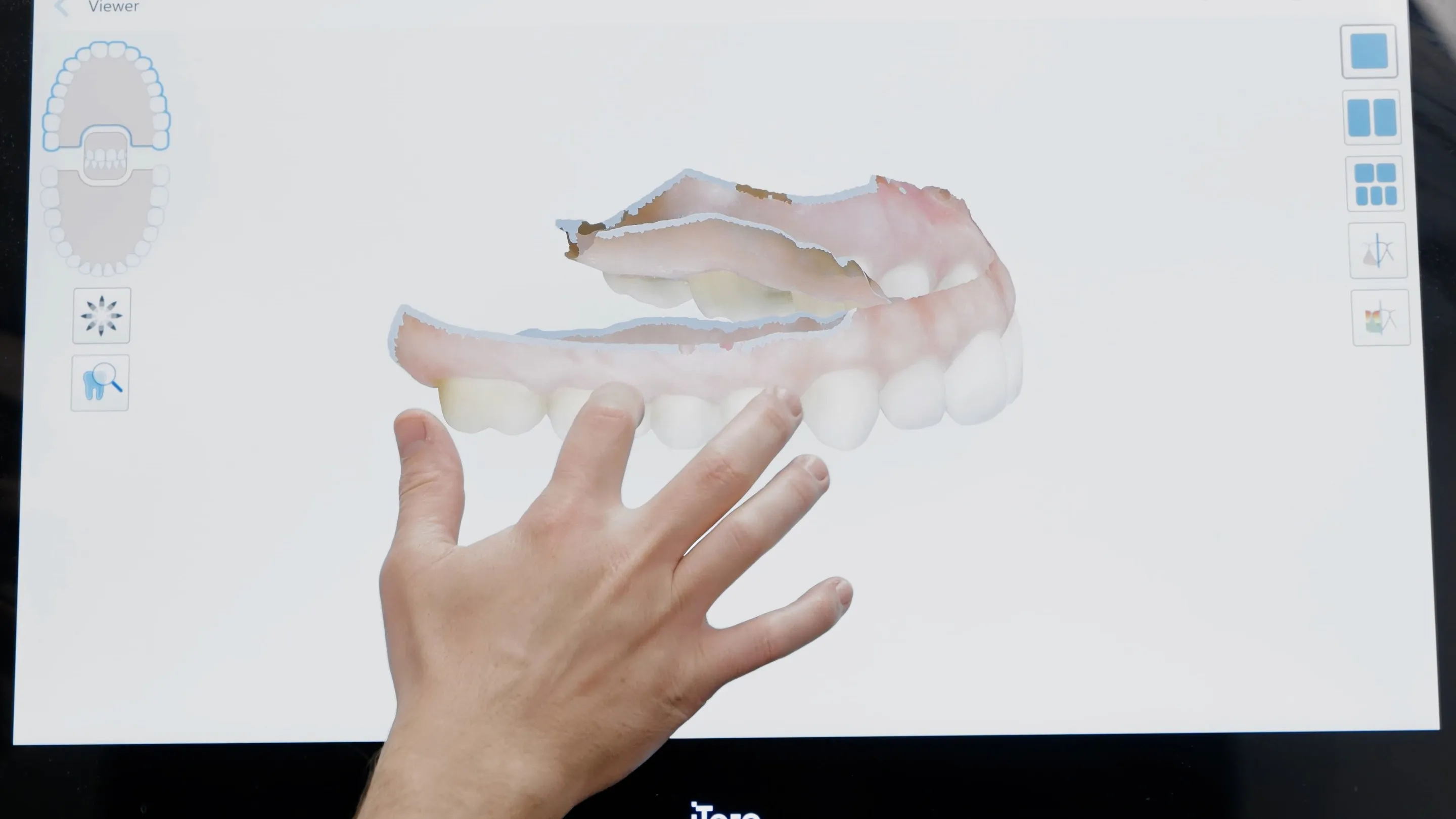
A digital scanner builds a 3D model of the teeth on screen, which can be turned and examined from any angle. It is used in place of the tray of impression material for things like crowns, night guards and clear aligners.
Frequently Asked Questions
Where is the office?
At 1318 N Mills Ave, Orlando, FL 32803, on North Mills Avenue.
How are instruments kept clean between patients?
Dental practices follow infection-control guidance from the CDC: reusable instruments are cleaned, packaged and heat-sterilized between patients, single-use items are thrown away after one use, and treatment-room surfaces are cleaned and disinfected between appointments.
Why are X-rays and scans shown on a screen?
Because a digital image can be enlarged, compared with earlier images and shown to you as it is explained. Seeing the tooth being discussed makes it easier to understand what was found and why a treatment is being suggested.
What should I bring to my first visit?
Usually your completed forms, a photo ID, your dental insurance card if you have one, and a list of the medications you take. The new patient forms page has the detail, and the front desk can confirm when you book.