

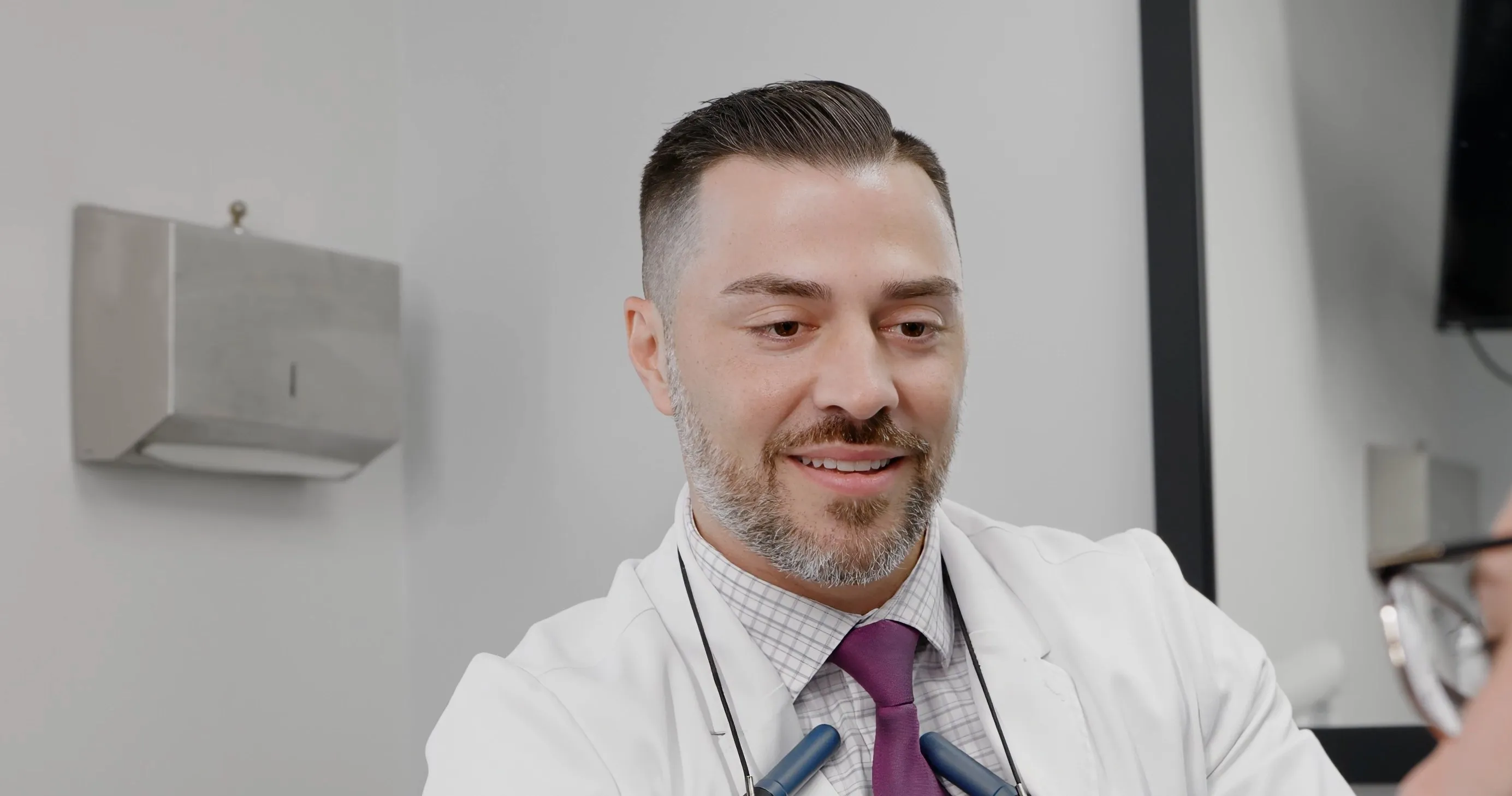
Why a cleaning is not just brushing
Coming in for regular dental cleanings and exams is one of the most important things you can do to keep your smile healthy for a lifetime. Brushing and flossing remove plaque — the soft film of bacteria that forms on teeth every day. What they cannot remove is calculus, also called tartar: plaque that has hardened by mineralizing against the tooth. Once that happens it bonds to the enamel, and only a dental instrument will take it off.
Tartar matters because it is rough and porous and holds bacteria against the gum line. That is where gum disease starts, and gum disease is the leading cause of tooth loss in adults. It builds up fastest where a brush reaches least: behind the lower front teeth, on the cheek side of the upper molars, and between teeth.
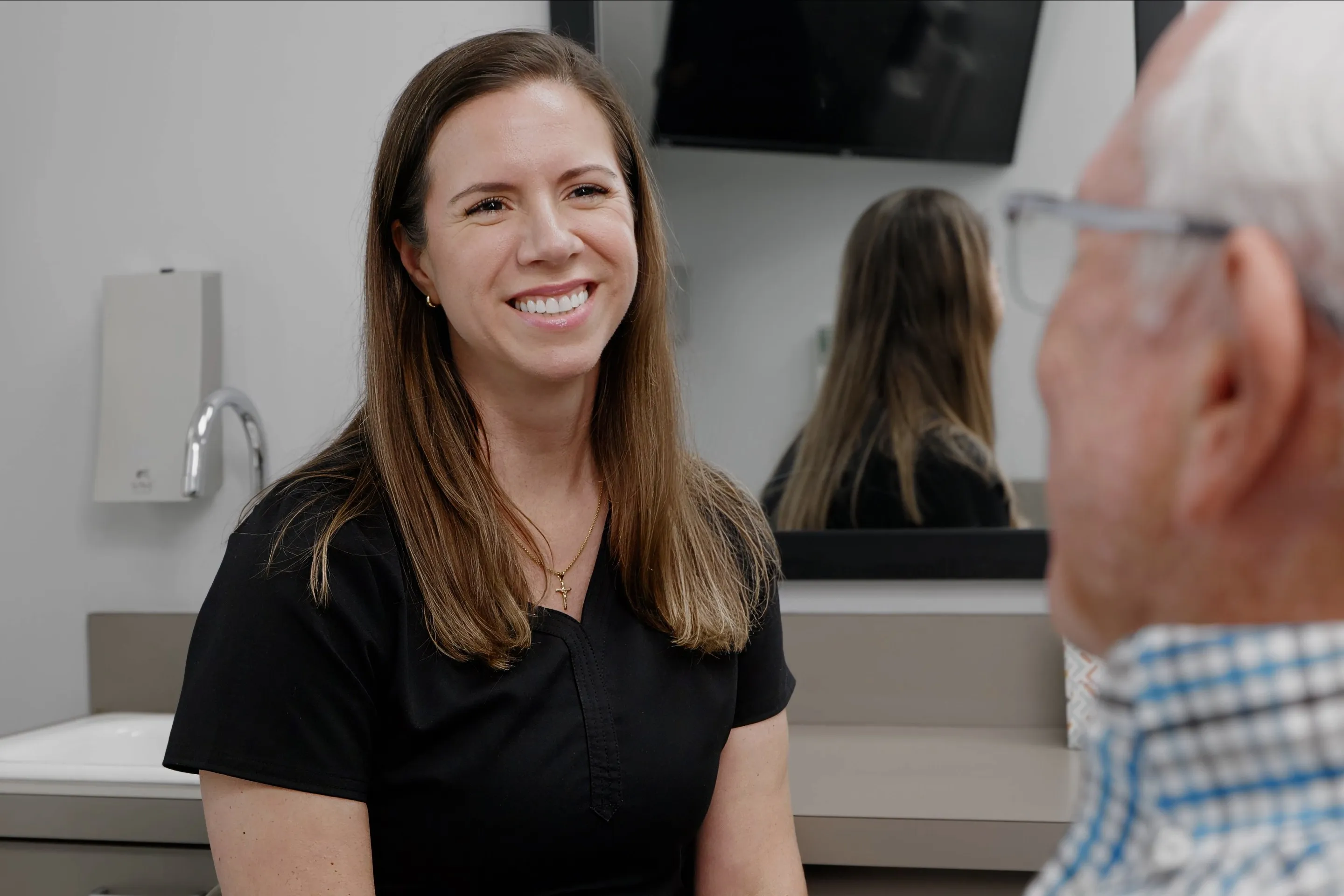
What an exam looks for
An exam is a survey of the whole mouth, not just the teeth. A dentist checks each tooth for decay, examines existing fillings and crowns for cracks or leaking edges, and looks for signs of grinding such as flattened or chipped edges.
The gums are checked by measuring the small pocket between each tooth and the gum. Healthy pockets are shallow; deeper ones, or ones that bleed, are the first measurable sign of periodontal disease. The tongue, cheeks, palate and throat are screened for anything abnormal, which is how oral cancer is most often found early. The jaw joints and your bite are part of the check as well.
None of this depends on something hurting. Most of what an exam finds — early decay, gum pockets, a failing filling — is painless until it is advanced, which is exactly why it is looked for on a schedule.

What the X-rays show
X-rays show what an eye cannot: decay starting between teeth, infection at the tip of a root, bone loss around the roots, and problems below the gum line. Bite-wing X-rays, taken with the teeth together, are the usual check for decay between the back teeth. A panoramic image shows the whole jaw at once.
Digital X-rays appear on screen in seconds and need substantially less radiation than the film they replaced. How often they are taken depends on your age and history rather than a fixed rule. More on the equipment is under dental technology.
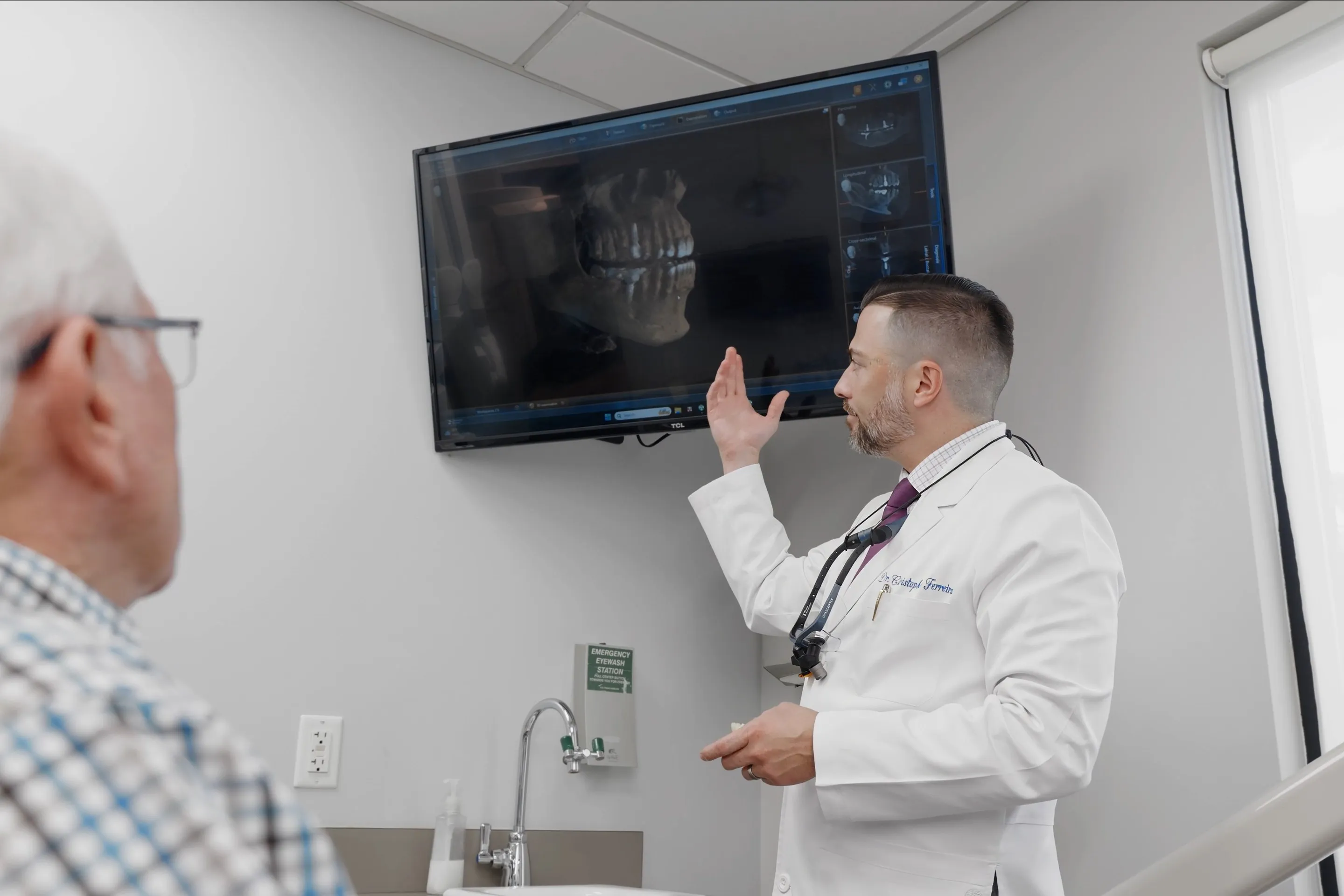
A cleaning appointment typically runs in the same order. Scaling comes first: tartar is removed from above and just below the gum line, with hand instruments, an ultrasonic scaler, or both. The teeth are then polished to remove surface staining and leave a smooth finish that plaque finds harder to cling to, and flossed to clear anything left between them.
A fluoride treatment may be applied at the end if your decay risk calls for it. Then comes the examination, any X-rays that are due, and a discussion of anything found — what it is, whether it needs treatment, and how soon.
If something does need treatment, that is a separate decision made after the appointment, not during it. Costs are covered under financial options.
Maintaining a good and consistent oral health routine is what keeps the results of a cleaning. Brush twice a day for two minutes with a fluoride toothpaste and a soft brush, angling the bristles toward the gum line and using small, gentle strokes — scrubbing hard wears the gums and enamel without cleaning any better.
Clean between your teeth once a day, with floss, interdental brushes or a water flosser. Curve floss into a C-shape around each tooth and slide it gently under the gum line, rather than snapping it straight down. Between the teeth is where a brush does not reach, and where most adult decay and gum disease begins.
Sugar and acid matter by frequency more than amount: sipping a sweet drink over an afternoon does more harm than the same drink with a meal. Ask at your visit if you would like to be shown a technique — it is a normal request.
Frequently Asked Questions
Does a cleaning hurt?
For most people it is uncomfortable at worst. If your gums are inflamed or your teeth are sensitive, say so at the start — the appointment can be adjusted, and a numbing gel or local anesthetic is an option where it is needed.
How often should I have a cleaning and exam?
Every six months suits most people, but the right interval depends on your own risk. Someone with gum disease, a high decay rate, diabetes or a dry mouth may need to be seen every three or four months. Your dentist will recommend an interval after examining you.
What if I have not been to a dentist in years?
That is common and it is not a problem. More tartar takes longer to remove and sometimes needs more than one visit, but the process is the same, and nobody is going to lecture you about it.
Why do my gums bleed during a cleaning?
Bleeding usually means the gums are inflamed, most often from plaque and tartar sitting along the gum line. It is one of the earliest signs of gum disease, and in its early form it generally settles once the area is cleaned and kept clean.
What is a deep cleaning?
Scaling and root planing: a more thorough cleaning below the gum line, recommended when the pockets around the teeth show periodontal disease. It is usually done with local anesthetic and often split across two visits. A routine cleaning works above and just below the gum line.
Do I need X-rays at every visit?
No. How often X-rays are taken depends on your age, your history of decay and gum disease, and whether anything has changed. Many adults with healthy teeth need bite-wing X-rays only every year or two.