

What a veneer is
When you look in the mirror, one or more teeth may stand out for the wrong reasons — a different color, a chipped or worn edge, a gap, or a tooth that sits slightly out of line. A porcelain veneer is a thin custom shell bonded to the front surface of a tooth. It changes color, shape, length and apparent alignment in one step, which is why dental veneers are used where several things need correcting at once.
Porcelain is used because it handles light much like enamel — translucent, with depth rather than a flat painted look — and because it resists staining far better than the composite used for dental bonding. Once bonded, a veneer becomes very strong, and it is cleaned just like a natural tooth.
Veneers suit people with healthy teeth and gums who want to change the teeth that show when they smile. They are less suitable where a tooth is heavily filled or broken down (a crown may protect it better), where gum disease is active, or where heavy grinding has not been addressed.

Veneers usually require removing a thin layer of enamel — a fraction of a millimeter — so the shell sits flush rather than bulking the tooth outward. Enamel does not grow back. Once a tooth is prepared for a veneer it will need a veneer or crown from then on.
That is not an argument against them. It is an argument for being certain first, and for asking whether a less invasive option would achieve enough: whitening for color alone, bonding for a single chip or small gap, or clear aligners for teeth that are crooked rather than misshapen.
Some cases allow minimal-prep or no-prep veneers, where little or no enamel is removed. Whether that applies depends on your existing tooth position and how much the shape needs to change — teeth that sit further back can often take a veneer with less preparation than teeth that already sit forward.
The process, step by step
Veneer treatment typically runs over a few appointments:
- Consultation and planning. An exam, X-rays and a conversation about what you want to change. Any decay or gum disease is treated first.
- Whitening, if you want it. Porcelain cannot be whitened later, so the other teeth are lightened first and the veneers matched to the result.
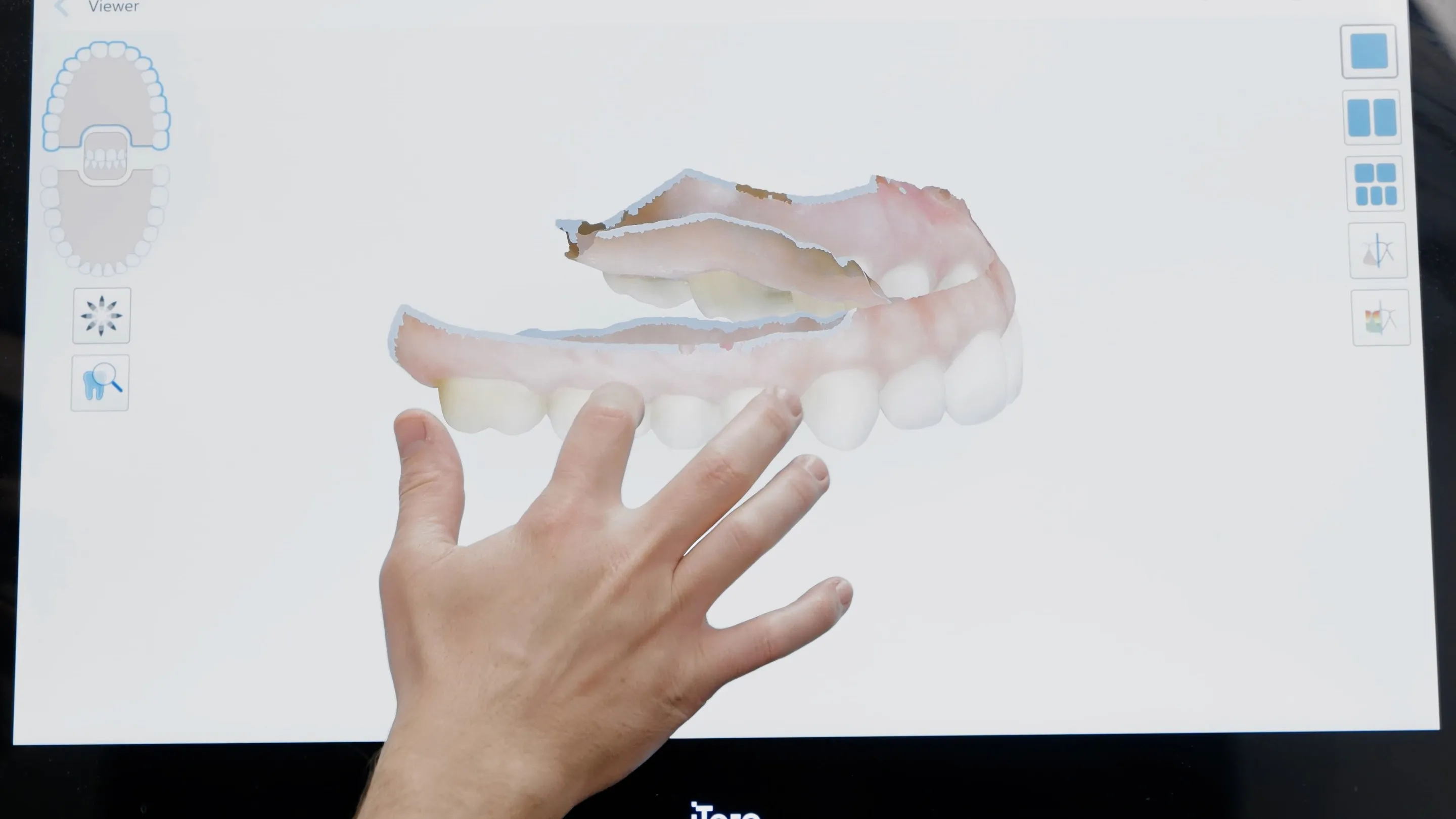
- Preparation. Under local anesthetic, a thin layer of enamel is shaped, and a record of the teeth is taken for the laboratory.
- Temporaries. Temporary veneers are usually worn while the laboratory makes the finals, which commonly takes a couple of weeks.
- Try-in and bonding. The finals are tried in to check shade, shape and fit before they are permanently bonded and the bite adjusted.
Living with veneers
Teeth can feel slightly different for the first few days, and mild sensitivity to hot and cold is common while they settle. After that, veneers are looked after like natural teeth: brush twice a day, clean between the teeth, and keep up regular cleanings and exams. The tooth underneath can still decay at the edges, so the margins need the same care as any other tooth.
Porcelain is strong but not indestructible. Avoid biting nails, ice or pens, and do not use your teeth as tools. If you grind or clench, a night guard protects the veneers while you sleep.
Veneers are typically a larger investment than bonding or whitening, and purely cosmetic treatment is usually not covered by insurance. Ask for a written estimate, and see financial options for how payment works.

Frequently Asked Questions
How long do porcelain veneers last?
Well-made porcelain veneers frequently last well over a decade. Grinding, biting nails or opening things with your teeth shortens that considerably, and a night guard is often recommended for people who grind.
Will veneers look fake?
That comes down to planning and the ceramist. Shade, translucency, length and shape all need matching to your face and the rest of your teeth. Veneers that look artificial are usually too white, too thick or too uniform.
Can veneers come off?
Debonding is uncommon but possible, and a veneer can chip. Both are usually repairable or replaceable. Keep any veneer that comes off and call the practice.
Are veneers painful?
Preparation is normally done under local anesthetic, so it should not hurt. Some people notice mild sensitivity to hot and cold for a few days afterward, which usually settles.
Can I whiten veneers?
No. Porcelain does not respond to whitening. If you want your other teeth lighter, whiten them before the veneers are made so the porcelain is matched to the new shade.
What is the difference between veneers and bonding?
Bonding is composite resin shaped directly on the tooth in one visit and is usually reversible. Porcelain veneers are made in a laboratory, resist staining better and last longer, but normally need a thin layer of enamel removed, which makes them permanent.
Do I need veneers on every tooth?
No. Some people need one or two to match a single tooth that stands out; others choose the teeth that show when they smile. The number depends on what you want to change, and a consultation is where that gets decided.