

How clear aligners work
Invisalign is a brand of clear aligner system. Treatment uses a series of custom-made clear plastic trays, each shaped slightly differently from your current tooth position. Wearing a tray applies gentle, steady pressure that moves the teeth a small amount; you then move on to the next tray in the series, and the movements accumulate.
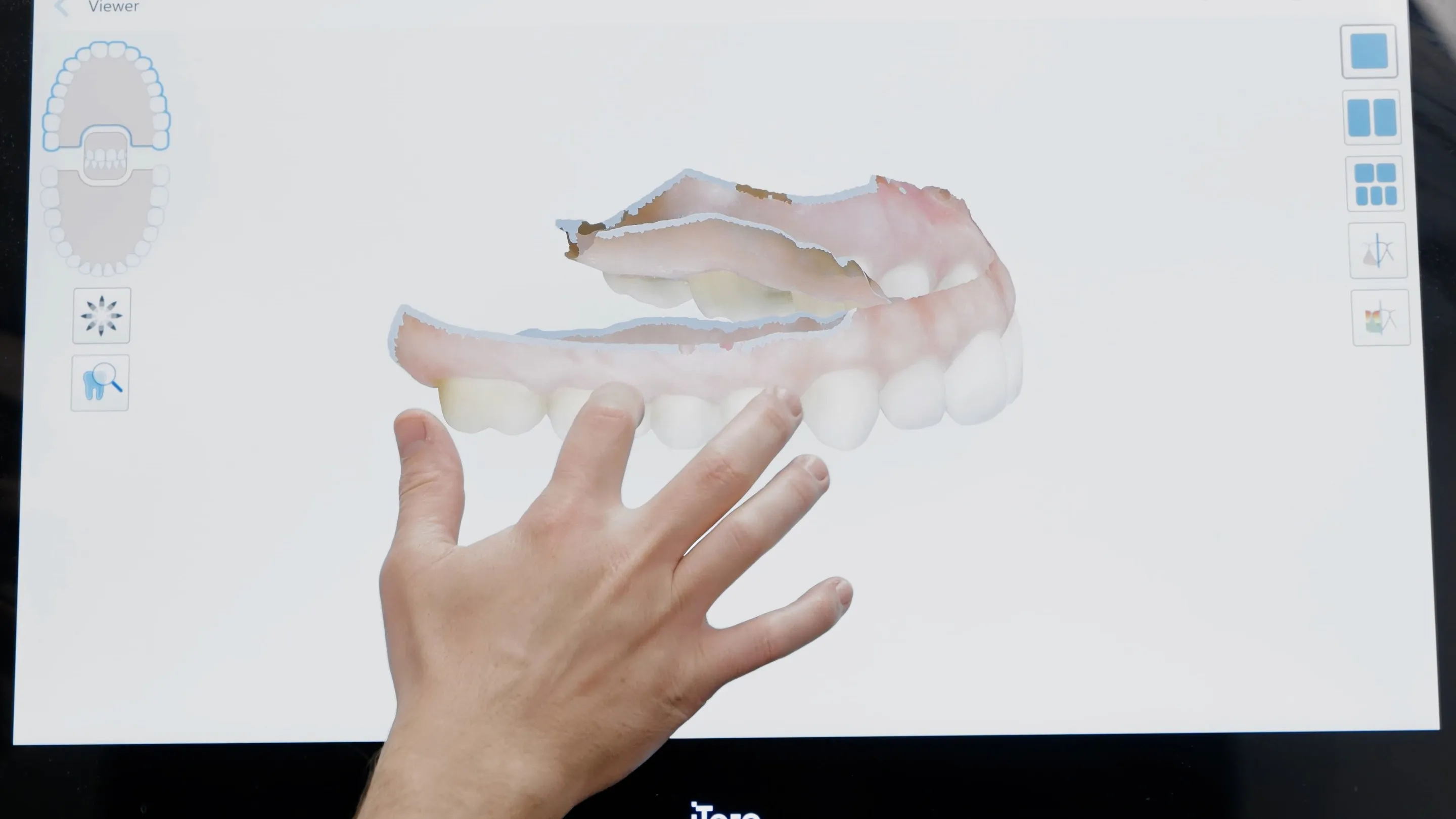
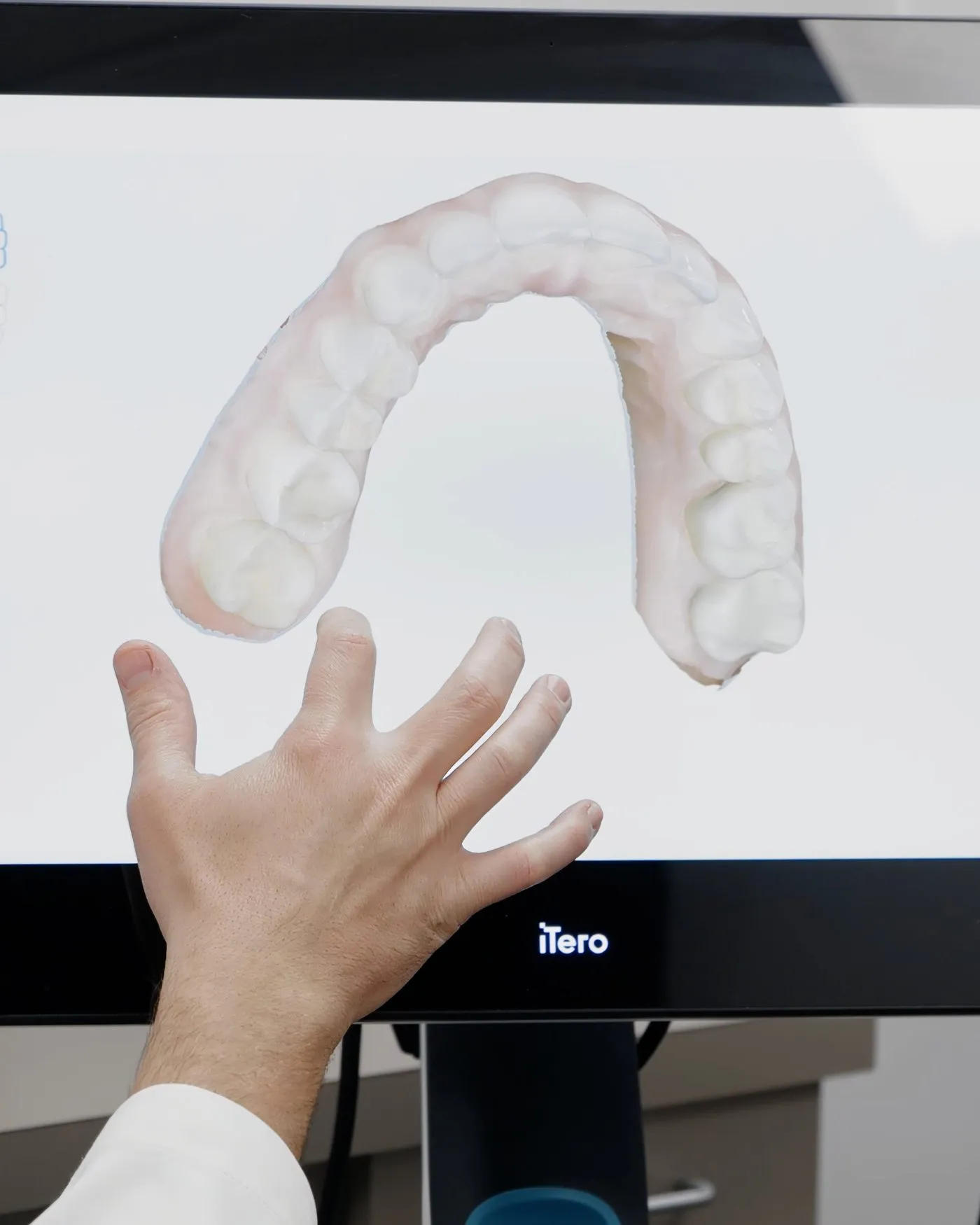
Treatment is usually planned from a digital scan of the teeth rather than trays of impression putty. The scan is used to map the movements from start to finish, which is also how you can see a simulation of the planned result before committing. Aligners are commonly changed every week or two, with periodic check-ups to confirm the teeth are tracking as planned.
Because the trays are removable, you take them out to eat and to clean your teeth — which is the main practical difference from fixed braces. There are no brackets or wires to catch food, and brushing and flossing stay as they were.
Aligners handle crowding, spacing and many bite corrections predictably. They suit adults and older teens who want straighter teeth and are willing to wear the trays consistently, including people whose teeth have shifted since braces years ago.
Complex rotations, significant vertical movement and severe bite discrepancies are harder, and some cases are better treated with fixed braces or by an orthodontist. An honest assessment says so at the start rather than part-way through.
Small tooth-colored attachments are often bonded to certain teeth to give the aligners something to grip. They are shaped from the same composite used for dental bonding, and they come off at the end of treatment. Aligners also pair well with other cosmetic work: straightening first can reduce how much tooth needs preparing for veneers, or make them unnecessary.
Aligners are typically worn 20 to 22 hours a day, removed only for eating and cleaning. This is the single biggest factor in whether treatment finishes on schedule: trays left out for long stretches stop moving the teeth, and the next set may not fit.
- Drink only water while wearing them. Sugary or hot drinks under a tray bathe the teeth and can warp the plastic.
- Brush before putting them back in, so food is not trapped against the teeth.
- Clean the trays gently with cool water and a soft brush — hot water can distort them.
- Keep the case with you. Most lost aligners are wrapped in a napkin at a meal.
Expect some pressure for a day or two with each new set, and a slight lisp at first that usually passes within days.
Retention is not optional
Teeth drift back toward their original positions after any orthodontic treatment. Retainers, worn as instructed and usually indefinitely at night, are what preserve the result. Retainers wear out and are replaced from time to time, so it is worth including them in the cost of treatment from the start.
Regular cleanings and exams carry on as normal during and after treatment. Cost is covered on the financial options page; some dental plans include an orthodontic benefit, so check yours before starting.
Frequently Asked Questions
How long does Invisalign treatment take?
It depends on how far the teeth need to move. Simple cases can take a matter of months; complex ones considerably longer. An assessment gives a realistic estimate for your teeth.
Will aligners affect my speech?
Most people have a slight lisp for a few days with a new set of aligners, and then adapt.
Can people tell I am wearing them?
They are far less visible than fixed braces, though attachments and the edges of the trays can be seen close up.
Do clear aligners hurt?
Most people feel pressure or tightness for a day or two after changing to a new set of aligners. It usually fades as the teeth move, and is generally milder than the soreness associated with fixed braces.
Can I eat with aligners in?
No. Take them out to eat, and drink only water while they are in. Brush your teeth before putting them back, so food and sugar are not held against the teeth under the plastic.
Am I too old for aligners?
Age is rarely the limit. Adults of any age can move teeth, provided the teeth and gums are healthy. Gum disease and decay are treated before orthodontic treatment starts.
What happens after treatment finishes?
You wear retainers. Teeth drift back toward their old positions after any orthodontic treatment, and retainers — usually worn at night, often indefinitely — are what keep the result.