

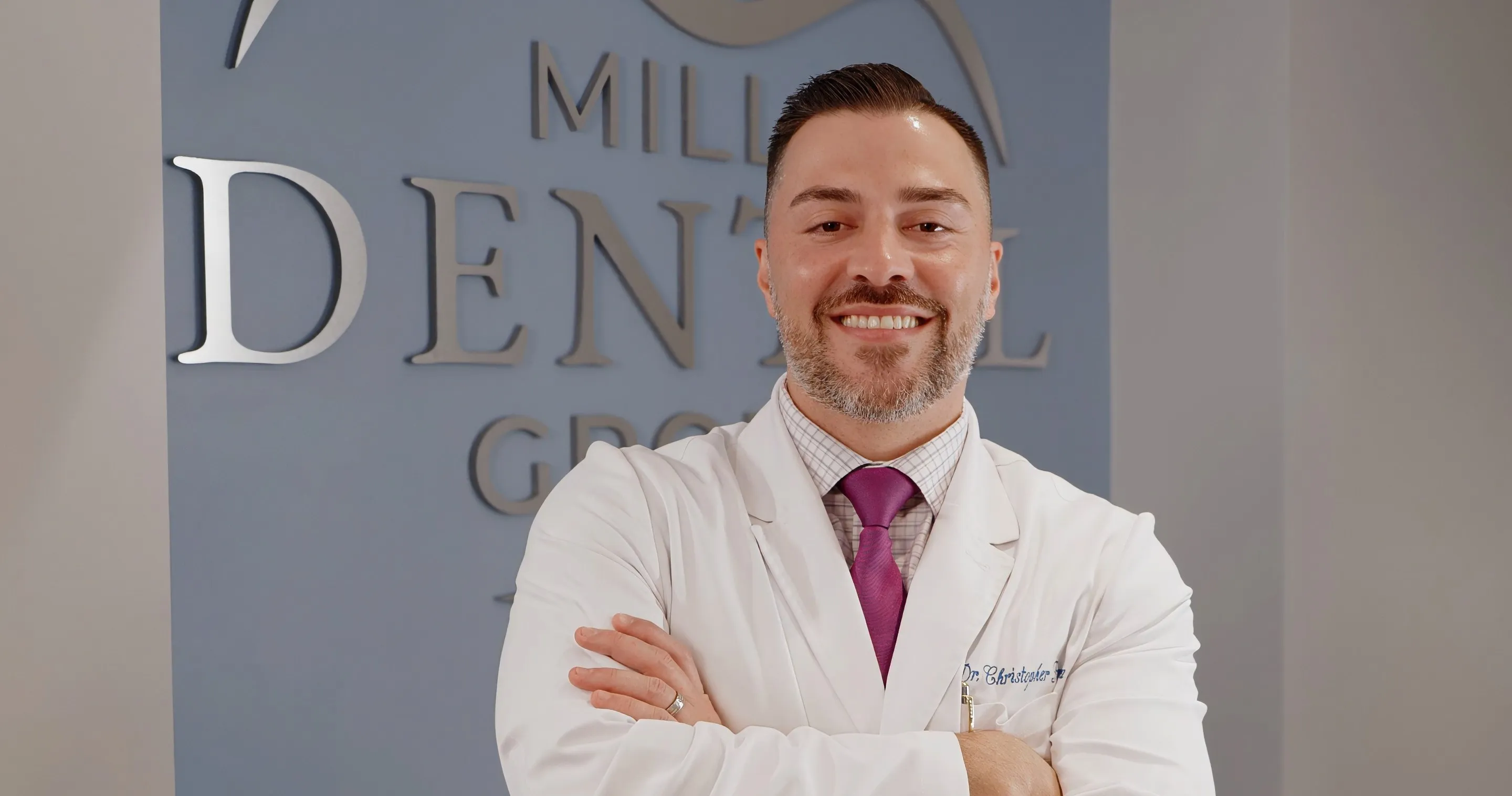
Dr. Christopher Ferreira, DMD
Dr. Christopher Ferreira, DMD, grew up in Orlando and practices at Mills Dental Group on North Mills Avenue. He is a general dentist, which means the work covers the whole mouth and the whole family: routine cleanings and exams, fillings and crowns, cosmetic treatment such as whitening and clear aligners, and the problems that cannot wait for a routine appointment.
A general dentist is usually the first person to see a problem, and often the one who treats it. Part of the job is also knowing when a case is better served by a specialist — an oral surgeon, an endodontist, an orthodontist or a periodontist — and making sure the handover is clear, so a patient is not left to piece it together themselves.
What an appointment involves
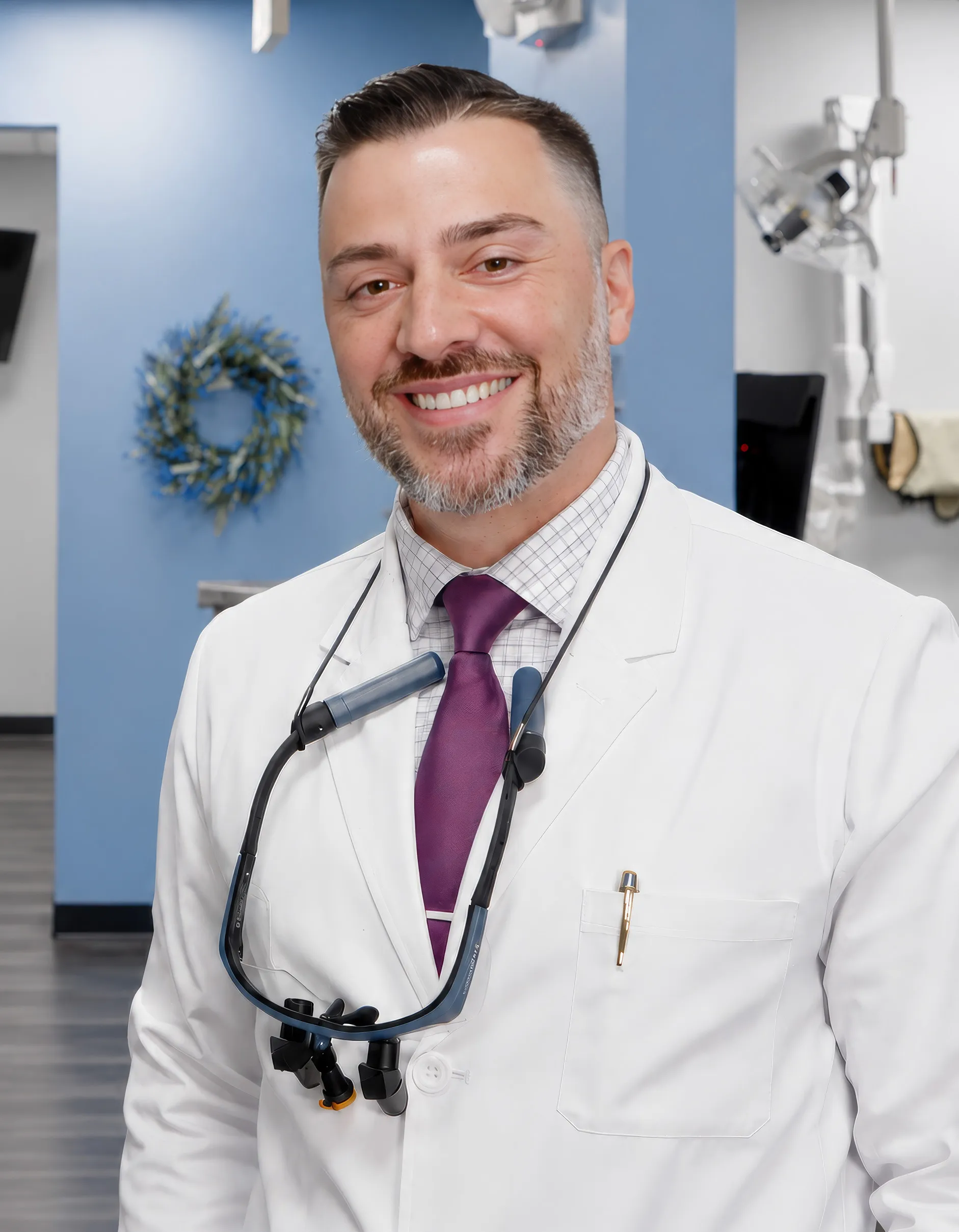
An examination looks at more than the teeth. The gums, the bite, the soft tissue of the cheeks, tongue and throat, and any old fillings or crowns are all checked, alongside X-rays where they are due. Changes since the last visit matter as much as what is there today.
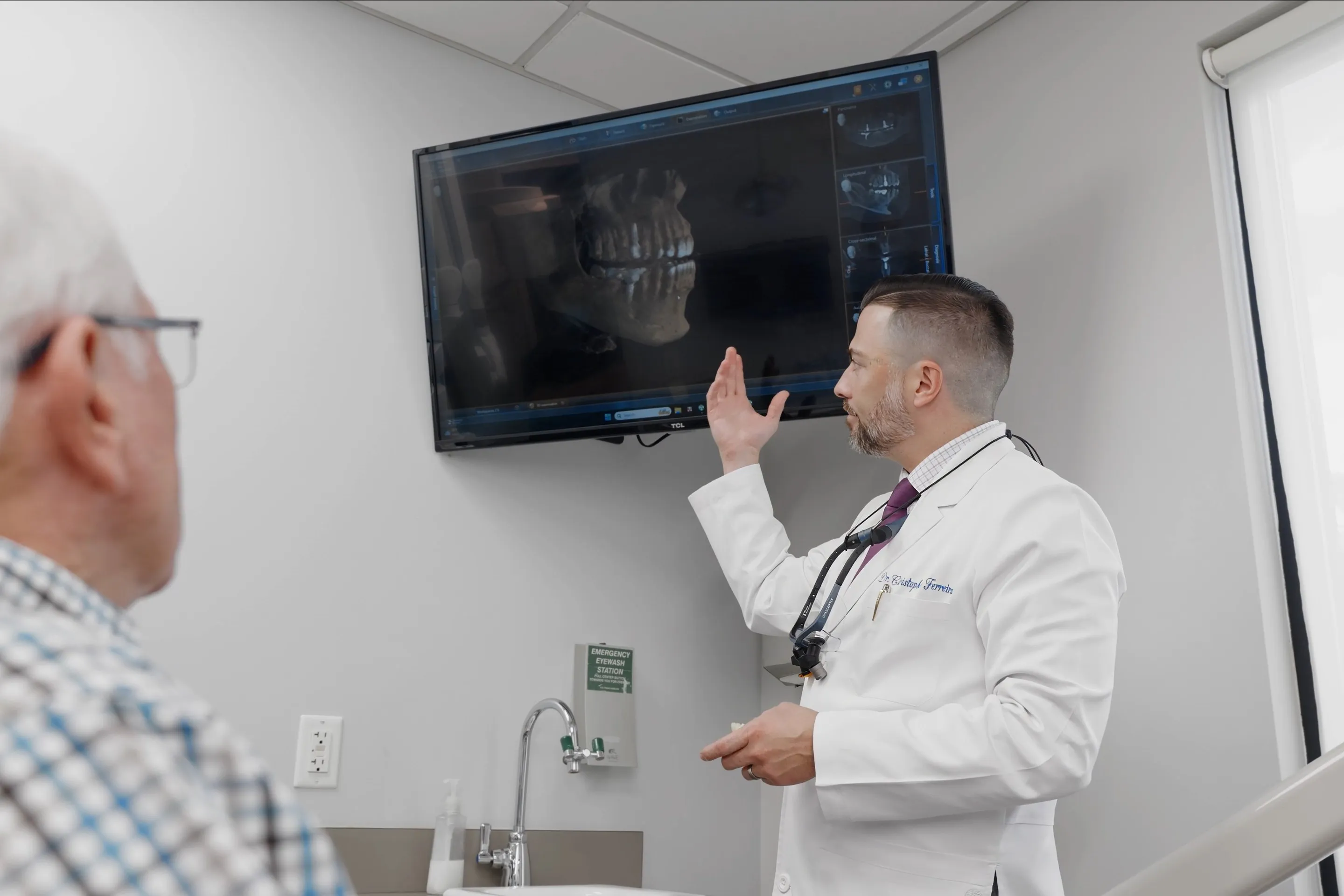
What was found is then explained, with the images on screen where that helps, so a cracked filling or a shadow on an X-ray is something you can see rather than something described to you. Where there are options, including the option of waiting and watching, they are set out with what each involves.
Nothing is decided in the chair. You leave knowing what was found and what it would cost to deal with, and you decide from there. How payment works is covered under financial options.
The range of care
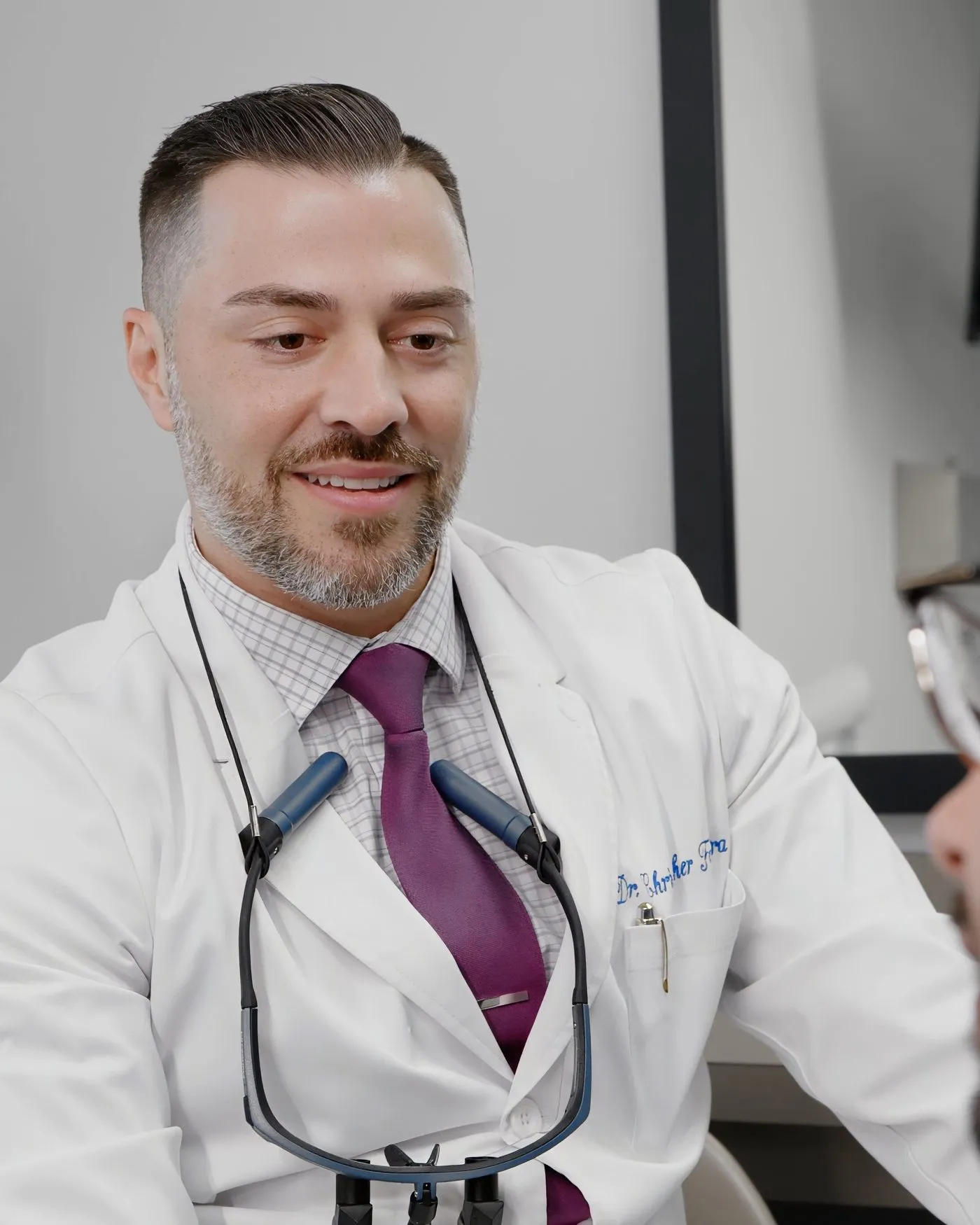
Most of the work is general dentistry: the check-ups and cleanings that keep small problems small, sealants and fluoride for teeth at risk of decay, and night guards for people who grind. Younger patients are seen for children's dentistry.
When a tooth is damaged or lost, restorative dentistry rebuilds or replaces it — bridges, dentures, implants, root canal treatment and, where a tooth cannot be saved, extraction. Cosmetic dentistry covers bonding and porcelain veneers, and emergency dentistry covers the visits nobody plans.
Diagnosis is supported by dental technology including digital X-rays and 3D cone beam imaging.
Frequently Asked Questions
Does Dr. Ferreira see children?
Yes. Guidance is that a child should be seen by their first birthday, or within six months of the first tooth appearing — largely so the dentist is familiar before anything needs doing.
What happens at a first appointment?
Usually a full set of X-rays, an examination of the teeth, gums and soft tissue, and a cleaning — then a conversation about anything found and what, if anything, needs doing.
What should I tell the dentist before treatment?
Any medications you take, including blood thinners and bone medications, any medical conditions, allergies (particularly to anesthetics, latex or antibiotics), whether you are or may be pregnant, and whether you are anxious about dental work. Each of these can change how treatment is planned.
Can my records and X-rays come from my previous dentist?
Usually, yes. Your previous office can send your records and recent X-rays with your written authorization, which can save retaking images you have already had.
Is it reasonable to ask for a second opinion?
Yes. Asking for a second opinion on a large or expensive treatment plan is common and sensible. Bring the plan and any recent X-rays with you so the two can be compared.