

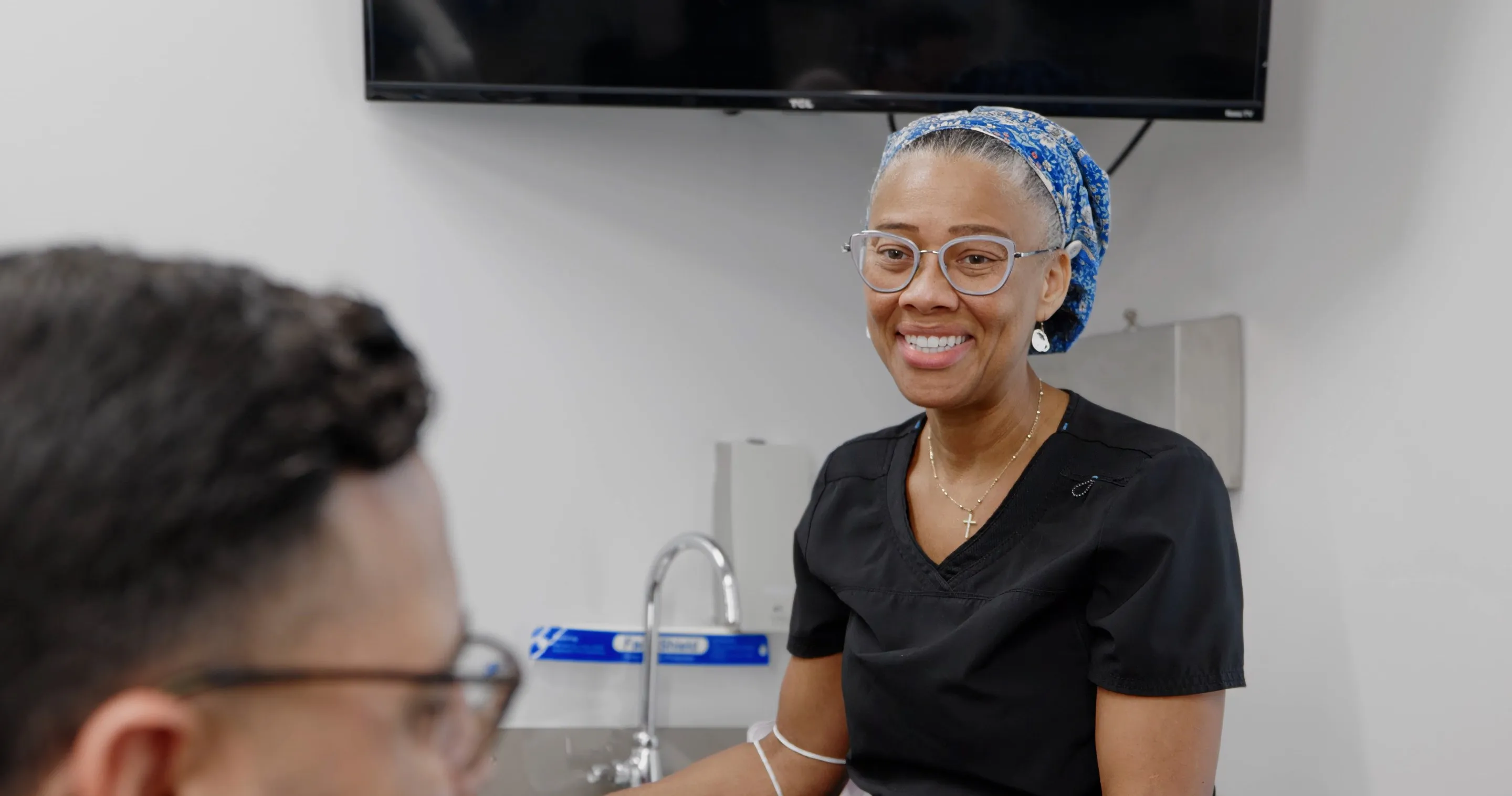
Your child's first dental visit
A child can build a lifelong, healthy smile by starting dental care at a young age. Guidance from the American Academy of Pediatric Dentistry and the American Dental Association is that a child should see a dentist by their first birthday, or within six months of the first tooth appearing.
That first visit is mostly about familiarity. A short look at the teeth and gums — very young children are often examined sitting on a parent's lap — a conversation with you about brushing, feeding and habits, and, importantly, a positive experience, so the dentist is not a stranger when something actually needs doing.
Later visits follow the pattern of an adult cleaning and exam, scaled to the child: a gentle cleaning, a check of how the teeth are coming in, and, when they are due, preventive treatments such as fluoride.

It is common to assume baby teeth matter less because they fall out. They hold space for the permanent teeth growing beneath them; losing one early lets its neighbors drift into the gap, which causes crowding later and can mean orthodontic treatment that would not otherwise have been needed.
They also matter for eating, speech development and comfort, and some of them stay until age eleven or twelve. Decay in baby teeth is painful in exactly the way it is in adult teeth, and because baby enamel is thinner, it can spread faster.
Baby teeth usually begin appearing around six months, most often the two lower front teeth first. The full set of twenty is typically complete by around age three. Permanent teeth begin replacing them from about age six — often with the first permanent molars, which come in behind the baby teeth rather than replacing any — and continue into the early teens. Wisdom teeth, if they come at all, arrive later still.
Timing varies a lot between children, and being a few months early or late is usually not a concern on its own. Teething can make a baby sore, drooly and keen to chew; a clean, chilled teething ring or gently rubbing the gum with a clean finger helps. The US Food and Drug Administration advises against numbing gels containing benzocaine for children under two, and against teething necklaces. A high fever is not a normal part of teething and is worth calling your doctor about.
When the first tooth appears is a good moment to book that first visit.
Preventing early decay
Tooth decay can happen even in the youngest patients. Baby bottle tooth decay comes from prolonged contact between teeth and sugary liquids — milk, formula or juice — especially at night, when saliva flow drops and stops washing the teeth. It usually shows first on the upper front teeth, as white spots along the gum line that later turn brown.
A bottle in bed should contain water, if anything. Wipe a baby's gums with a clean, damp cloth after feeds, even before the first tooth. Avoid dipping a pacifier in sugar or honey, and try not to share spoons or clean a pacifier in your own mouth, which passes decay-causing bacteria to the baby.
Brush as soon as the first tooth appears, with a smear of fluoride toothpaste for under-threes and a pea-sized amount after that. Children need help brushing until roughly age seven or eight. Sealants and fluoride treatment both help here, most usefully once the permanent molars arrive around age six.

Food, drink and a child's teeth
A child's nutrition and diet play an important part in their oral health. What matters most is not how much sugar a child has but how often: every sugary snack or sip starts a spell of acid attack on the enamel, and grazing through the day keeps the teeth under attack almost constantly.
Keeping sweet foods to mealtimes, offering water between meals, and choosing snacks such as cheese, fresh vegetables and plain yogurt all make a difference. Pediatric guidance is to avoid fruit juice for babies under one and keep it small, and with meals, after that. Sticky foods, including dried fruit, cling to the grooves of the back teeth longer than most people expect.
None of this needs to be strict to be effective. A dentist can go through a child's diet with you at a check-up and point to the one or two changes that would make the most difference.

One dentist for the whole family
Dr. Christopher Ferreira sees patients of every age, which means a child can be seen by the same dentist, in the same practice, as the rest of the family. Fostering oral health from a young age is about helping children establish a healthy smile that lasts a lifetime, and continuity is a large part of that: the same people follow a child's teeth as they come in, fall out and are replaced.
Children's care sits alongside the rest of our general and family dentistry. If a child has a toothache, a knocked-out tooth or an injury to the mouth, see emergency dentistry — for a knocked-out baby tooth, do not try to put it back in.

Frequently Asked Questions
At what age should my child first be seen?
By the first birthday, or within six months of the first tooth appearing — whichever comes first. The first visit is mainly about getting familiar and catching anything early, rather than treatment.
Why treat a baby tooth that is going to fall out?
Because some baby teeth stay until age eleven or twelve, and decay in them hurts just as it does in adult teeth. They also hold the space for the permanent teeth. A baby tooth lost early to decay can let its neighbors drift into the gap, which leads to crowding later.
When should my child start using toothpaste, and how much?
From the first tooth. Under age three, use a smear of fluoride toothpaste about the size of a grain of rice; from three to six, a pea-sized amount. Children need an adult to help them brush until around age seven or eight.
Is thumb sucking or a pacifier a problem?
Usually not in the early years, and most children stop on their own between two and four. A habit that continues once the permanent teeth start coming in can affect how the teeth and jaws develop, so it is worth mentioning at a check-up if it has not stopped by then.
How can I prepare my child for a first visit?
Keep it low-key and positive. Talk about the dentist counting and looking at their teeth, and avoid words like "hurt" or "needle" that put the idea there. Books and videos about a first dental visit help, and a morning appointment, when a young child is rested, usually goes better.
Does my child need dental X-rays?
Not always, and not on a fixed schedule. X-rays are taken when there is a reason to — often once the back teeth are touching, since decay between them cannot be seen — and how often depends on the child's own risk of decay.