

Baby bottle tooth decay is a pattern of cavities in a baby’s or toddler’s teeth caused by frequent, long contact with sugary liquids. The good news is that a few steady habits at home can prevent most of it.
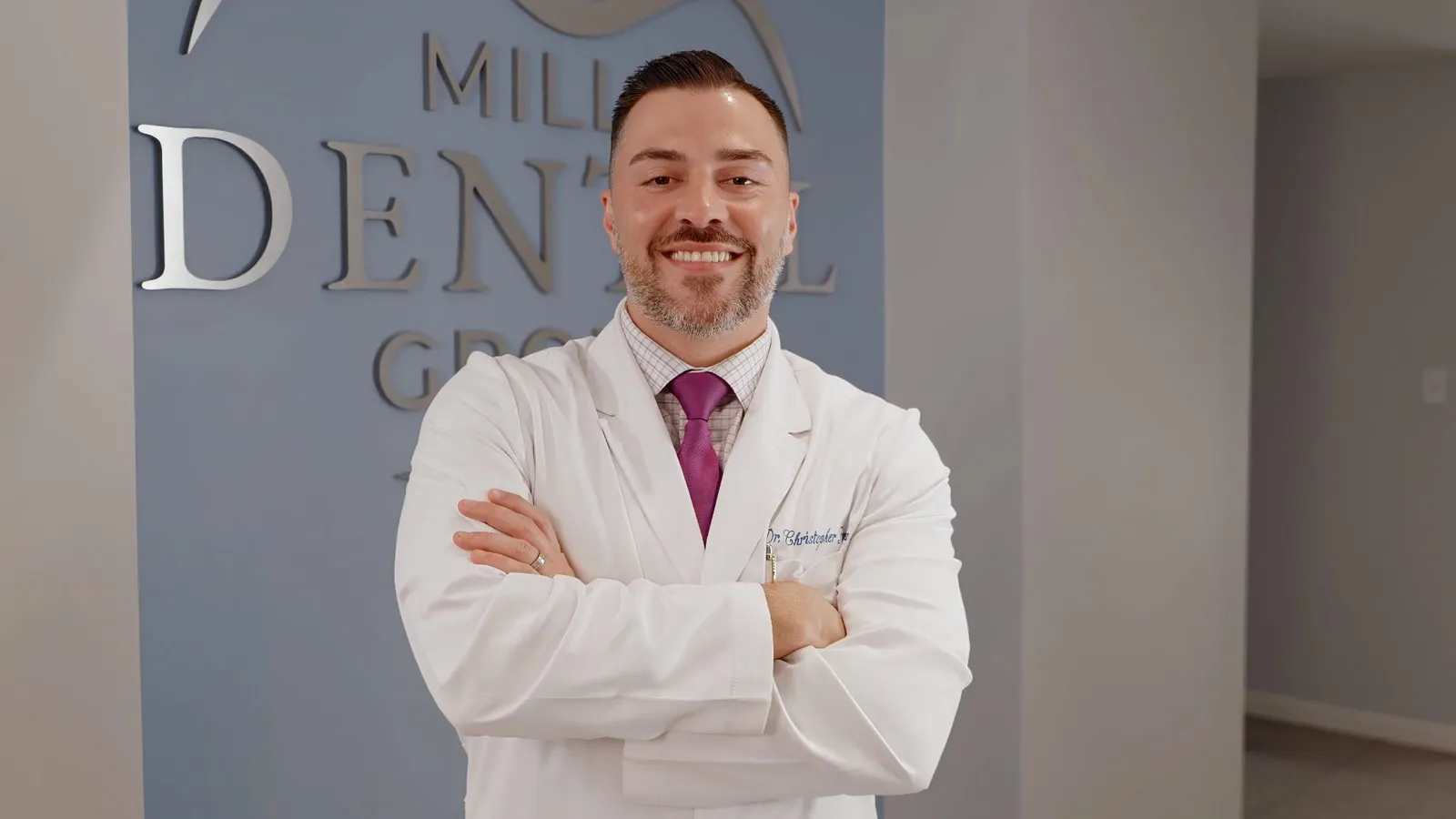
At Mills Dental Group, our Orlando, FL family dentist, Dr. Christopher Ferreira, cares for patients of all ages, including the very youngest.
Here’s what you need to know about protecting your child’s first teeth.
What Causes Baby Bottle Tooth Decay?
Milk, formula and juice all contain sugars that mouth bacteria feed on. Those bacteria make acids that weaken the enamel on new teeth.
The American Dental Association names prolonged exposure to sugary drinks as the main cause. The risk is highest when a baby falls asleep with a bottle or uses one as a pacifier.
Bacteria can also pass from parent to baby through saliva. Sharing a spoon or cleaning a pacifier in your own mouth are common ways it happens.
Which Teeth Are Most at Risk?
The upper front teeth are usually affected first, although other teeth can decay too. Early decay can be hard to spot at home.
Why Baby Teeth Deserve Care
Baby teeth fall out, but they still matter. The CDC calls cavities the most common chronic childhood disease in the United States.
The same CDC page notes that more than half of children ages 6 to 8 have had a cavity in a baby tooth.
Bottle, Cup and Juice Habits That Help
Small changes to feeding routines help:
- Fill bottles only with formula, milk or breast milk.
- Let your baby finish bedtime and nap bottles before lying down to sleep.
- Keep pacifiers clean, and never dip them in sugar or honey.
- Start offering a cup by the first birthday.
- Follow the pediatric advice of no juice before age one, then no more than 4 to 6 ounces a day for ages 1 to 6, and none at bedtime.
Our team can also talk with you about pediatric nutrition and diet as your child starts solid foods.
Cleaning Gums and New Teeth
Wipe your baby’s gums with a clean, damp cloth or gauze pad after feedings. Once teeth appear, switch to a small, soft child-size toothbrush.
The ADA suggests a rice-grain smear of fluoride toothpaste until age 3, then a pea-sized amount from 3 to 6. The CDC advises checking with your dentist or doctor before using fluoride toothpaste under age 2, so ask what fits your child.
How Fluoride Helps Young Teeth
The CDC suggests asking about fluoride varnish as soon as the first tooth appears. It reports that varnish can prevent about one third of cavities in baby teeth.
During an exam, Dr. Ferreira and our team may apply a fluoride treatment to help strengthen your child’s enamel.
When to Schedule the First Visit
The ADA recommends a first dental visit when the first tooth comes in, and the CDC says to go by the first birthday. A child’s first dental visit introduces your little one to the dental chair and shows you how to care for their smile at home.
You can see the full list of our pediatric dentistry services.
Frequently Asked Questions
Can a sippy cup cause tooth decay too?
Yes, a sippy cup can cause the same kind of decay when it holds milk or juice that your child sips all day or at bedtime. The cup works like a bottle, keeping sugar on the teeth for long stretches.
Between meals, plain water is the safest choice for a sippy cup. Save milk and juice for mealtimes, when your child drinks them in one sitting.
How much juice is okay once my child turns one?
For children ages 1 to 6, the American Academy of Pediatrics advises no more than 4 to 6 ounces of fruit juice a day. Serving it with a meal, rather than letting your child sip it over hours, limits how long sugar stays on the teeth.
The same guidance says juice should never be given at bedtime. Whole fruit and water are better everyday choices.
Does Mills Dental Group see babies and toddlers?
Yes, Mills Dental Group cares for patients of all ages, and children are a big part of the practice. Pediatric services include your child’s first dental visit, guidance on baby bottle tooth decay, help with tooth eruption, and advice on pediatric nutrition and diet.
Parents can often bring their own care and their child’s care to the same office, which keeps family visits simple.
Can my child get a fluoride treatment at Mills Dental Group?
Yes, Dr. Christopher Ferreira and the team may apply a fluoride treatment during your child’s exam. Fluoride helps strengthen enamel and prevent cavities, which matters most while new teeth are still coming in.
If you have questions about whether fluoride is right for your child’s age, ask at the visit. You can also call Mills Dental Group at 407-894-1100.
When is Mills Dental Group open for children’s appointments?
Mills Dental Group is open Monday through Thursday from 7am to 5pm, at 1318 North Mills Avenue in Orlando. Early morning openings can make it easier to fit a toddler’s visit in before naptime or work.
To book a time that suits your family’s schedule, call Mills Dental Group at 407-894-1100.
Protect Your Child’s Smile With Mills Dental Group
Steady bedtime, cup and brushing habits go a long way toward keeping baby bottle tooth decay away. If you have questions about your child’s teeth, the team at Mills Dental Group in Orlando, FL is happy to help.
Call Mills Dental Group today at 407-894-1100 or request an appointment online.